
Study the Entire Bible in 6 Months
Do you have some understanding of the Bible, but want to see how it all fits together?
Many Christians have heard sermons, attended church, and read portions of the Bible, heard great Bible stories, but still feel unsure how the books, covenants, people, events, and teachings all connect.
Waymaker Bible Foundations is a six-month course designed to guide believers through the full storyline of Scripture, from Genesis to Revelation. It helps students move from scattered Bible knowledge to a clearer foundation in Scripture. Students will learn how the Old and the New Testaments connect, how God’s redemptive plan unfolds, and how Scripture speaks to faith, family, church, ministry, and everyday decisions.
This is not a beginner Bible class, and it is not an advanced seminary course. It is a structured course for everyday Christians who want to become more grounded in the Word of God, understand the major themes and lessons of God’s Word, and grow in confidence as they study and apply the Bible to everyday life.
Waymaker Bible Foundations is ideal for:
This course is structured, meaningful, and accessible for committed believers. Its not too basic and not overly advanced.
Waymaker Bible Foundations is more than simply reading through the Bible. The course is designed to help students understand what the Bible says, how its different books fit together, why its teachings matter, how they apply to everyday life, and how the entire biblical story points to Jesus Christ.
Students will learn to recognize the major people, events, covenants, teachings, themes, and turning points of Scripture while developing a stronger understanding of their identity and responsibilities as followers of Christ.
Students should expect:
Structured weekly Bible study
Assigned Scripture reading
Guided lessons and teaching
Reflection and practical application
Discussion and interaction
Quizzes and assessments
Opportunities to connect biblical truth with Christian living
A steady progression from Genesis through Revelation
This is not intended to be a casual devotional course, but neither is it designed to overwhelm the student. The six-month structure allows students to grow steadily, build confidence in navigating Scripture, and develop a stronger biblical foundation for life, service, and future ministry training.
Students who successfully complete Waymaker Bible Foundations will receive a Certificate of Completion from York St. Peter’s Evangelistic Organization.
The certificate recognizes successful completion of the six-month Bible foundations course, including structured study of both the Old Testament and New Testament, assigned learning activities, and required assessments.
This is not an ordination certificate and does not authorize the holder to function as clergy or perform marriages. However, it provides a meaningful foundation for personal spiritual growth and may serve as an important first step for students who later wish to pursue more advanced ministry training.
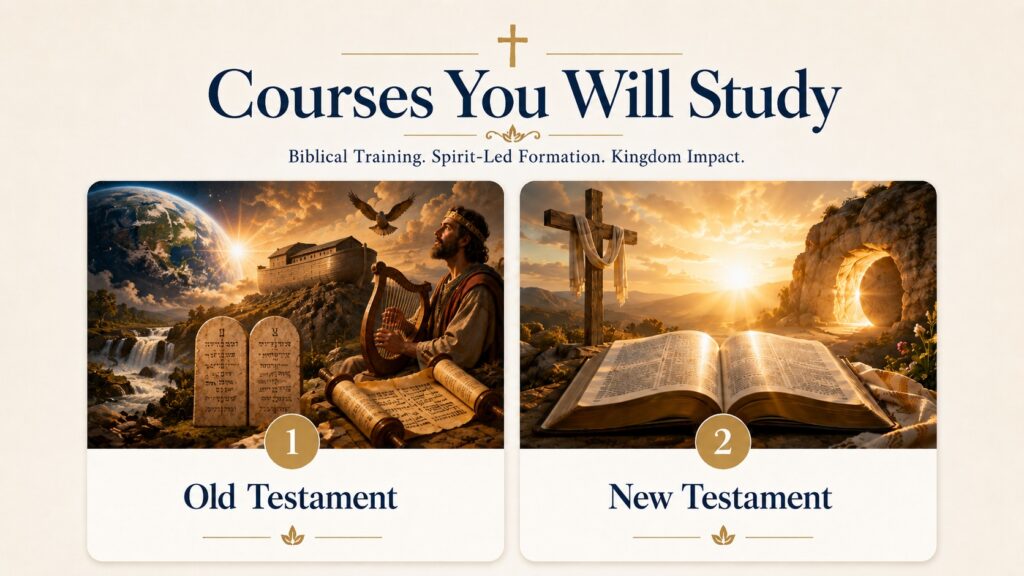
Old Testament
The Old Testament portion gives students a strong foundation for understanding the entire biblical story. Students will see how creation, sin, covenant, worship, sacrifice, law, prophecy, judgment, mercy, and redemption all prepare the way for Jesus Christ.
Students will study:
Creation and the Fall
The opening chapters of Genesis, humanity made in the image of God, the entrance of sin into the world, its consequences, and the beginning of God’s promise of redemption.
Noah and the Early World
The spread of sin, the judgment of the flood, God’s covenant with Noah, and what these events reveal about judgment, mercy, obedience, and God’s faithfulness.
Abraham and the Patriarchs
God’s covenant with Abraham, the promises of land, descendants, and blessing, and the lives of Isaac, Jacob, and Joseph. Students will examine how God works through imperfect people to accomplish His purposes.
Moses and the Exodus
Israel’s deliverance from Egypt, the Passover, the crossing of the Red Sea, the giving of the Law, the Tabernacle, and the development of Israel as a covenant people.
The Law, Worship, and Sacrifice
The purpose of the Law, the priesthood, offerings and sacrifices, holiness, atonement, worship, and the relationship between obedience and covenant faithfulness.
The Wilderness and the Promised Land
Israel’s testing in the wilderness, lessons in faith and rebellion, the leadership of Joshua, and Israel’s entrance into the land God had promised.
The Judges and the Need for Godly Leadership
The repeated cycle of rebellion, oppression, repentance, and deliverance in the Book of Judges, and what this period teaches about spiritual compromise and the need for faithful leadership.
The Kings and the Kingdom
The lives and reigns of Saul, David, and Solomon, the establishment of Jerusalem, the Davidic covenant, the Temple, and the division of the kingdom.
Israel and Judah
The spiritual decline of the northern and southern kingdoms, the role of kings and prophets, idolatry, national judgment, and the consequences of abandoning covenant faithfulness.
The Prophets
The major themes of the prophetic books, including repentance, justice, holiness, judgment, restoration, the coming Messiah, and the future hope of God’s people.
Exile and Restoration
The fall of Jerusalem, the Babylonian exile, and the return under leaders such as Ezra and Nehemiah. Students will study how God preserved His people even during judgment and displacement.
Wisdom and Worship
Selected study from Psalms, Proverbs, Job, Ecclesiastes, and other wisdom literature, with attention to prayer, suffering, worship, practical wisdom, and the fear of the Lord.
The Promise of the Messiah
Key Old Testament prophecies and patterns pointing toward Christ, including the promised King, suffering servant, priesthood, sacrifice, covenant, and hope of redemption.
How the Old Testament Points Forward to Christ
Students will learn to recognize major themes, people, events, covenants, sacrifices, and promises that prepare the way for the Gospel.
The New Testament portion focuses on the fulfillment of God’s redemptive plan through Jesus Christ. Students will study the life and ministry of Christ, the Gospel, the birth of the Church, the work of the Holy Spirit, Christian doctrine, discipleship, ministry, and the hope of Christ’s return.
Students will study:
The Gospels and the Life of Jesus Christ
The birth, baptism, teachings, miracles, parables, ministry, compassion, authority, and identity of Jesus Christ as presented in Matthew, Mark, Luke, and John.
The Kingdom of God
Jesus’ teaching concerning repentance, faith, discipleship, righteousness, forgiveness, prayer, service, and life under the rule of God.
The Gospel Message
The biblical meaning of sin, salvation, grace, repentance, faith, reconciliation, redemption, and eternal life through Jesus Christ.
The Death and Resurrection of Christ
The final week of Jesus’ earthly ministry, the Last Supper, crucifixion, burial, resurrection, and the significance of the cross for salvation and Christian faith.
The Great Commission
Christ’s command to make disciples, preach the Gospel, baptize believers, and teach them to obey His Word.
Acts and the Birth of the Church
Pentecost, the coming of the Holy Spirit, the growth of the early Church, persecution, evangelism, missionary expansion, and the ministries of Peter and Paul.
The Ministry of the Holy Spirit
The Spirit’s role in regeneration, guidance, empowerment, spiritual gifts, Christian character, witness, and the life of the Church.
Paul and the Pauline Epistles
Major teachings from Romans through Philemon, including justification by faith, grace, Christian freedom, sanctification, spiritual gifts, church life, leadership, marriage, service, and Christian conduct.
The General Epistles
Key teachings from Hebrews, James, Peter, John, and Jude concerning faith, perseverance, holiness, love, suffering, false teaching, spiritual maturity, and faithful Christian living.
Christian Conduct and Spiritual Growth
Practical instruction concerning prayer, forgiveness, relationships, stewardship, service, integrity, holiness, spiritual fruit, and living as a faithful witness.
The Church and Christian Community
The purpose of the Church, fellowship, worship, communion, baptism, spiritual leadership, mutual care, discipline, service, and mission.
Trials, Persecution, and Perseverance
How the New Testament prepares believers to remain faithful during suffering, opposition, temptation, and spiritual difficulty.
End Times and the Book of Revelation
An introduction to the major themes of Revelation, including Christ’s victory, judgment, perseverance, worship, spiritual conflict, the return of Christ, and the ultimate triumph of God.
The Return of Christ and the Final Hope of Believers
The resurrection of the dead, final judgment, eternal life, the new heaven and new earth, and the Christian hope of being forever with the Lord.